14Jul
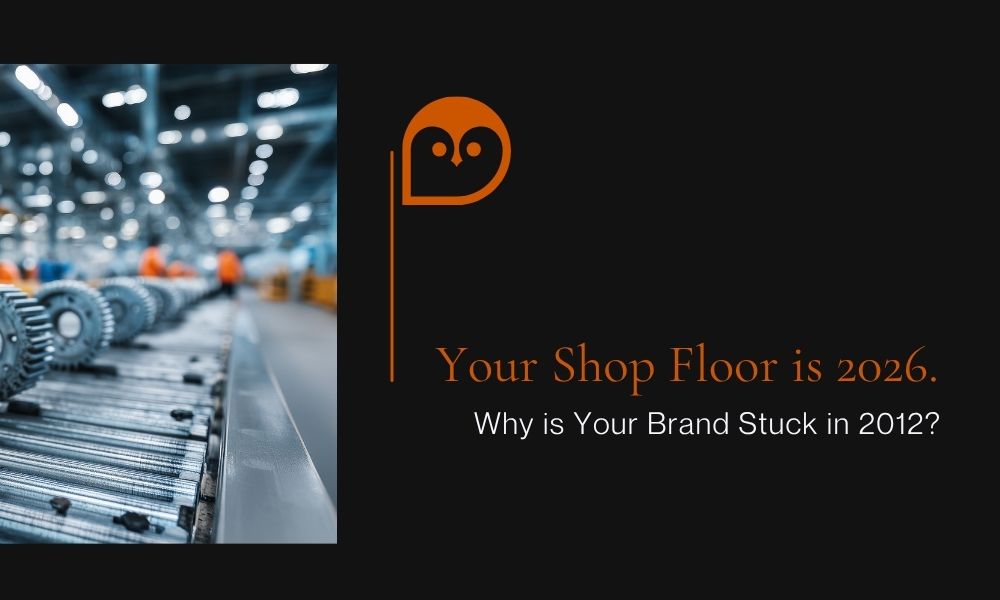
The “Make in India” Identity Crisis
Every great industrial transformation begins with an engineering breakthrough, but it endures through clear positioning.
Right now, the Indian manufacturing sector is experiencing its most significant structural shift in decades. The Union Budget 2026–27 has doubled down on transforming India into a self-reliant global supply chain ecosystem. With the Cabinet’s massive financial expansion of the India Semiconductor Mission (Semicon 2.0) to ₹1,27,500 crore and the enhanced ₹40,000 crore outlay for the Electronics Components Manufacturing Scheme (ECMS), the country is rapidly shifting away from low-tier component assembly toward high-precision, deep-tech component level design and fabrication.
Global procurement directors from Apple, specialized Tier-1 automotive suppliers, and aerospace OEMs are actively landing in industrial clusters across Noida, Chennai, and Bengaluru. They are no longer checking if India can assemble products; they want to know if Indian mid-market and enterprise manufacturers can innovate at a global standard.
Yet, a glaring friction point remains.
Walk through the gates of a modern Indian enterprise manufacturer today, and you will find an world-class facility. You will see AI-powered failure forecasting sensors, automated precision robotic welding arms, and teams utilizing real-time digital twins to simulate complex hardware architectures before production even begins. The machinery is state-of-the-art. The quality control is flawless. The engineering talent is elite.
But look at how that same company presents itself online, and you enter a time capsule.
The website looks like a static brochure from 2012. The logo is dated, the digital collateral is a cluttered mess of pixelated PDFs, and the corporate messaging relies entirely on tired, hollow cliches: "We deliver high quality, have unmatched trust, and assure on-time delivery."
When every single competitor promises the exact same things, those words stop meaning anything.
This is the "Make in India" Identity Crisis.
The Cost of an Outgrown Identity
Most businesses aren't struggling because they lack operational capabilities. They are struggling because they look, sound, and behave exactly like everyone else.
In the high-stakes world of international B2B procurement, decisions are made long before a prospect steps onto your shop floor. Before an OEM executive schedules a factory audit or requests a component sample, they look at your website. They evaluate your brand identity.
Identity design isn't a cosmetic exercise. It isn't about making your brand look pretty or picking colors you happen to like. It is about building immediate, undeniable credibility.
When your visual identity looks like the business you used to be rather than the advanced enterprise you have become, you are paying a silent tax. You are forcing international buyers to doubt your sophistication before the first conversation even starts. If your digital touchpoints feel clumsy, fragmented, and outdated, the implicit assumption is that your engineering processes might be exactly the same.
A polished, distinct visual identity communicates character, stability, and character from the very first impression. It signals to the market that you do not just occupy space in the supply chain—you own your category.
Clarity Comes Before Creativity
At The Owlchemy Co., we believe that execution without clear direction is expensive. A common reflex for industrial companies trying to pivot toward global exports is to rush into an aggressive digital marketing campaign or demand a quick graphic redesign.
More advertising does not solve a foundational clarity problem. More visibility simply means more global buyers overlooking the exact same outdated message.
Before you redraw your logo or rewrite your website, you must answer one question:
Why should a global OEM choose your enterprise over every other alternative available in Vietnam, Taiwan, or Central Europe?
The answer cannot be "low labor costs" or "government subsidies." Those are external market factors; they are not your distinct identity. Your brand strategy must be built on a deliberate position that you can uniquely defend.
When that strategic position is crystal clear, everything else aligns. Your identity design reflects your technological edge. Your digital platforms become active tools that turn global curiosity into serious commercial conversations. Your internal teams stop creating inconsistent marketing assets, and your global sales force can pitch with unified confidence.
Indian manufacturing has earned its seat at the global table. The infrastructure is ready. The policy tailwinds are strong.
Now, it is time to build brands that reflect the true quality of the businesses behind them. Stop letting a forgettable digital presence discount your memorable engineering capabilities.
Become impossible to ignore.