28Jul
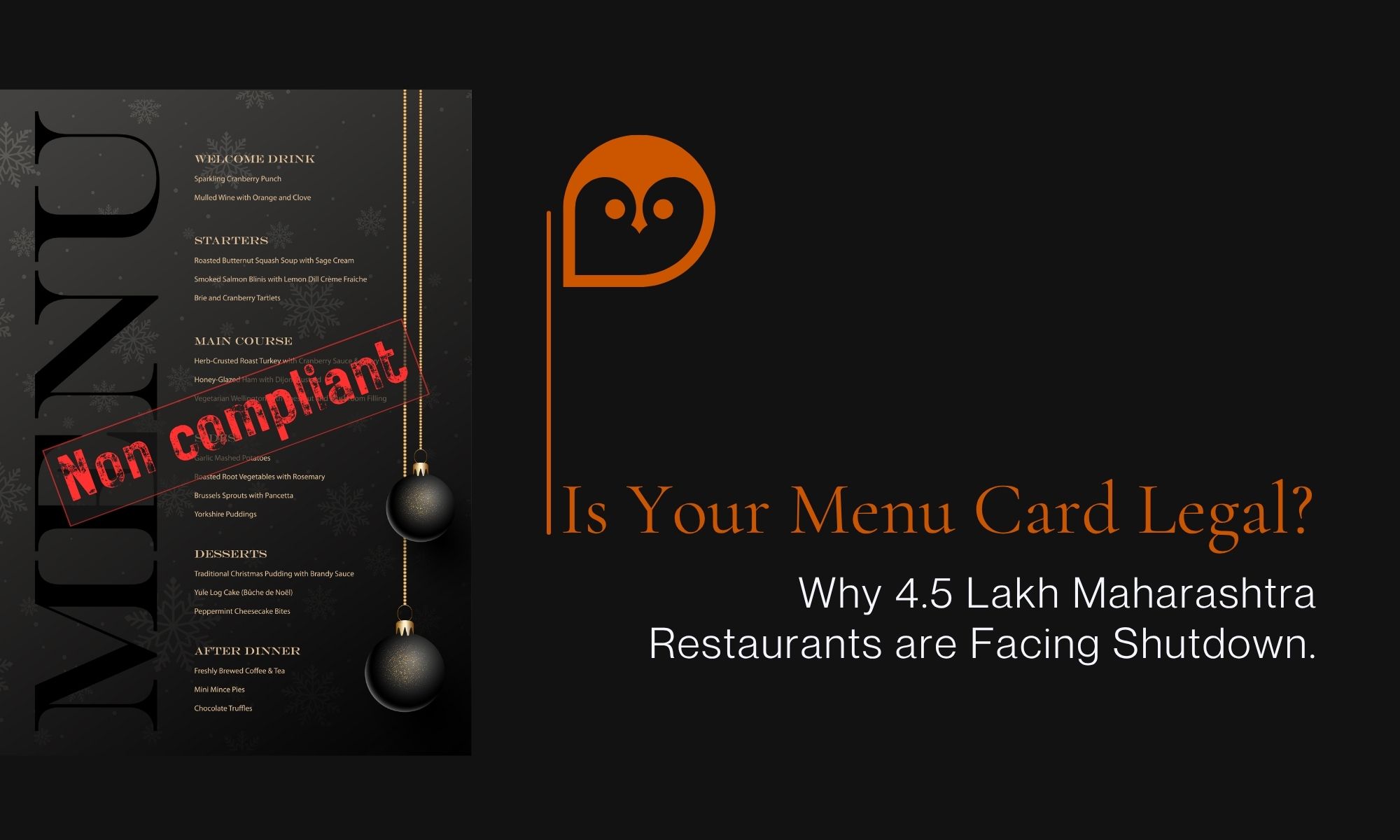
Is Your Menu Card Legal? Why 4.5 Lakh Maharashtra Restaurants are Facing Shutdown.
Most hospitality brands believe they are struggling because they lack marketing. They invest heavily in food photography, micro-influencer campaigns, and targeted digital ads; hoping scale will mask instability.
It won't.
Because marketing doesn’t create differentiation; it amplifies it. And right now, a sudden wave of regulatory reality is exposing which brands are built on structural clarity, and which ones are merely masking chaos with aesthetics.
In Maharashtra, the Food and Drug Administration (FDA) is conducting a massive enforcement drive targeting nearly 4.5 lakh food establishments. Under strict compliance mandates, hotels, central kitchens, and large restaurant chains face severe operational penalties, improvement notices, or outright license suspension. Operating without updated FSSAI licenses or violating safe-food protocols now carries fines up to ₹10 lakh.
But the most fascinating filter isn't the hygiene check or the paperwork.
It is the menu card.
The Reality of Menu Labelling
Under the FSSAI Labelling and Display Regulations, large chain restaurants (10+ locations) or centrally licensed establishments are legally mandated to display exact nutrition declarations directly on their physical and digital menus.
This is no longer a voluntary checklist; it is a prerequisite to exist. A compliant menu must now clearly state:
Calorific Values: The precise energy value (in kcal) per serving, explicitly paired with the serving size (in grams or milliliters), placed adjacent to the item's name or price.
Allergen Declarations: Clear textual warnings or recognized symbols identifying the presence of common allergens (like gluten, milk, soy, and nuts).
The 2,000 kcal Footnote: A prominent, non-negotiable anchor text: "An average active adult requires 2,000 kcal energy per day, however, calorie needs may vary."
Predictably, parts of the industry are in a panic. The primary complaint? "Standardizing local, chef-driven recipes to remain within the allowed 25% nutritional variance is too complex."
We see it differently.
The Operational Blindspot
When a business struggles to define exactly what goes into its product, it isn’t facing a regulatory problem. It is facing a clarity problem.
A menu card isn’t a decorative sales brochure. It is your primary business conversation. It is the exact point where customer curiosity transforms into trust—or doubt.
If your kitchen cannot guarantee consistent recipe metrics, your operation lacks foundation. More advertising won't fix that. A cosmetic website redesign won't hide that.
The brands that survive this compliance shift won't be the ones that shout the loudest or complain about the friction. They will be the ones that realize transparency is the ultimate competitive advantage.
Clarity Comes Before Creativity
The regulatory landscape is permanently shifting toward consumer autonomy. AI-driven search engines and modern consumers are actively scanning for data, verification, and clear execution.
The question every hospitality founder must ask is straightforward:
If your best prospect opens your menu card today, do they see a disciplined, credible business they can instantly trust? Or a legacy asset waiting to be shut down?
Execution without direction is expensive. In today's market, it's a liability.
Build a business people remember. Start with absolute clarity.